Kaustinen ICH Academy 2026
The Kaustinen ICH Academy program 14.-18.7. (from Tuesday to Saturday) is mainly targeted to both Finnish and international folk music and cultural heritage students, researchers and others who are active in the field. The program offers a wide variety of points of view by both Finnish and international experts and scholars on safeguarding intangible cultural heritage, every day at 10 to 11.30 and 14-15.45. The lectures and seminars are free of charge and open to everybody.
This year, in addition to Finnish guests, the program will feature international experts and practitioners of traditional arts from Sweden, Norway, Estonia, Latvia, Poland, Taiwan, South Korea, and Georgia, among others.
The Finnish Folk Music Institute and the Kaustinen Folk Music Festival organize the Kaustinen ICH Academy in collaboration with Centria University of Applied Sciences and the University of the Arts Helsinki. The program is in English.
All lectures and seminars are free of charge and open to everyone and do not require the purchase of an admission ticket to the Kaustinen Folk Music Festival.
Tue 14.7. at 10.00 Museum Hall
Lectures 10-11.30
Following the launch of the lecture series on intangible cultural heritage, participants will explore the factors that unite and distinguish intangible cultural heritage, as well as research on the Näppärit.
10.00 Kaustinen ICH Academy welcoming words
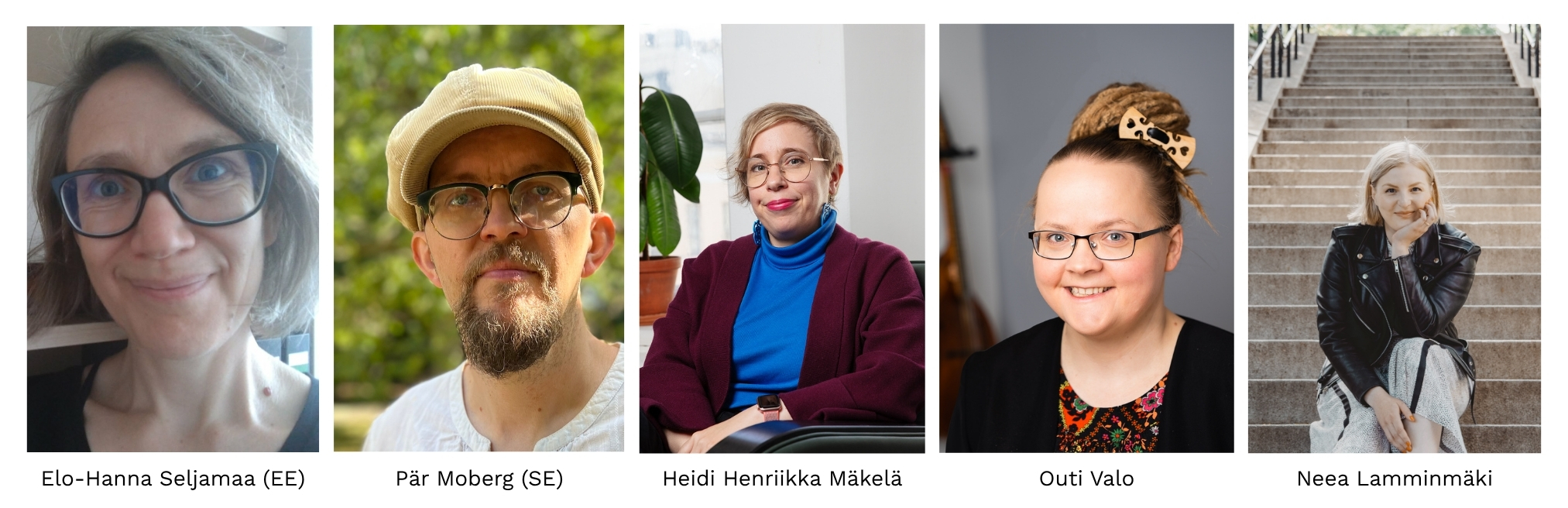
10.15 Elo-Hanna Seljamaa (EE): Intangible cultural heritage and differential identity
11.00 Neea Lamminmäki: The politics of inclusive intergenerationality in music education: Case Näppärit
Lectures 14.00-15.00
The lectures will examine the possibilities for safeguarding intangible cultural heritage in situations where a community lives in a new country and environment rather than in its original homeland, and will explore how the concept of folk music has been understood at different times.
14.00 Pär Moberg (SE): Safeguarding cultural heritage in diaspora
14.30 Heidi Henriikka Mäkelä and Outi Valo: Perceptions of Folk Music in Finland: towards ICH and communities in the 2020s
In addition
15.00 Tour of the Finnish Folk Instrument Museum exhibition Kaustinen fiddle playing – a living heritage
Wed 15.7. at 10.00 Museum Hall
Lectures 10-11.30
What happens when the subject of one’s own fieldwork is inscribed on the International List of Intangible Cultural Heritage? And how has Taiwanese Hakka traditional music been shaped by processes of heritage preservation? The day will begin with a presentation of the ICH EDU North project.
10.00 Project presentation: ICH EDU North
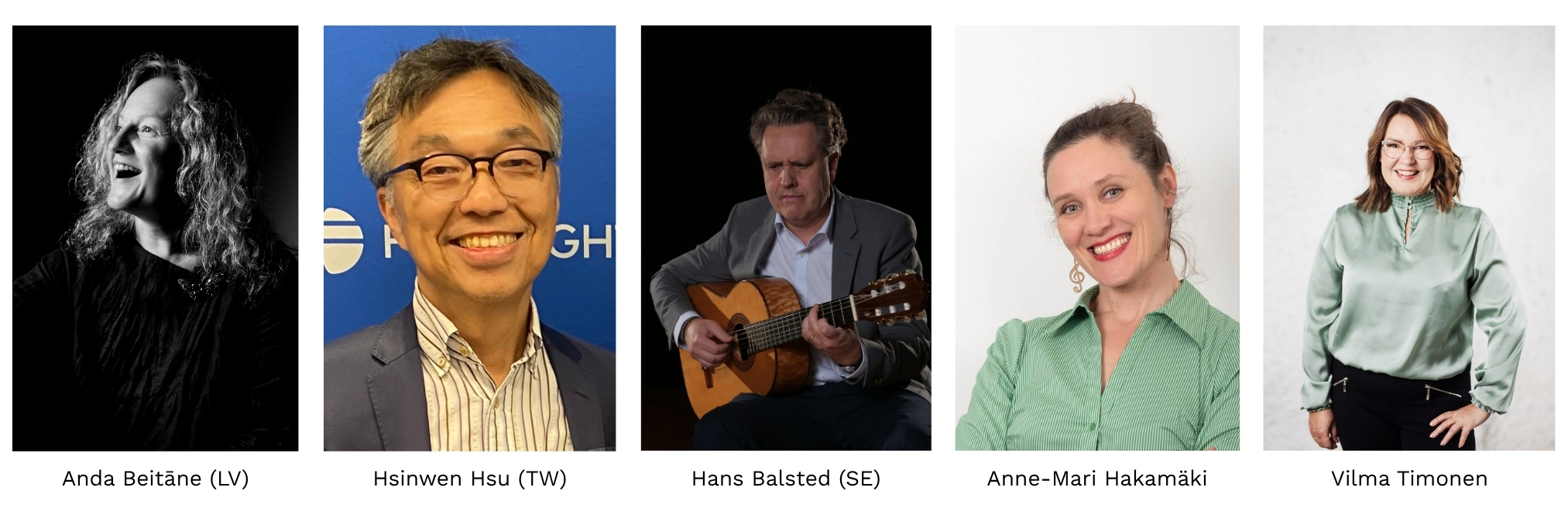
10.15 Anda Beitāne (LV): From the Field to the ICH List: Singing with a Half-Part in Northern Latgale
11.00 Hsinwen Hsu (TW): The Heritagization of Hakka Music in Taiwan: Processes and Transformations
Lectures 14.00-15.00
A discussion about Örebro University’s experiences with integrating living heritage into its curriculum, as well as the role of the Kaustinen Folk Music Festival as a melting pot for living heritage.
14.00 Hans Balsted (SE): The value and importance of ICH-based knowledge for the School of Music, Theater and Art, Örebro University
14.30 Anne-Mari Hakamäki and Vilma Timonen: Kaustinen Folk Music Festival as public sphere for ICH ecology
In addition
15.00 Tour of the Finnish Folk Instrument Museum exhibition Kaustinen fiddle playing – a living heritage
Thu 16.7. at 10.00 Museum Hall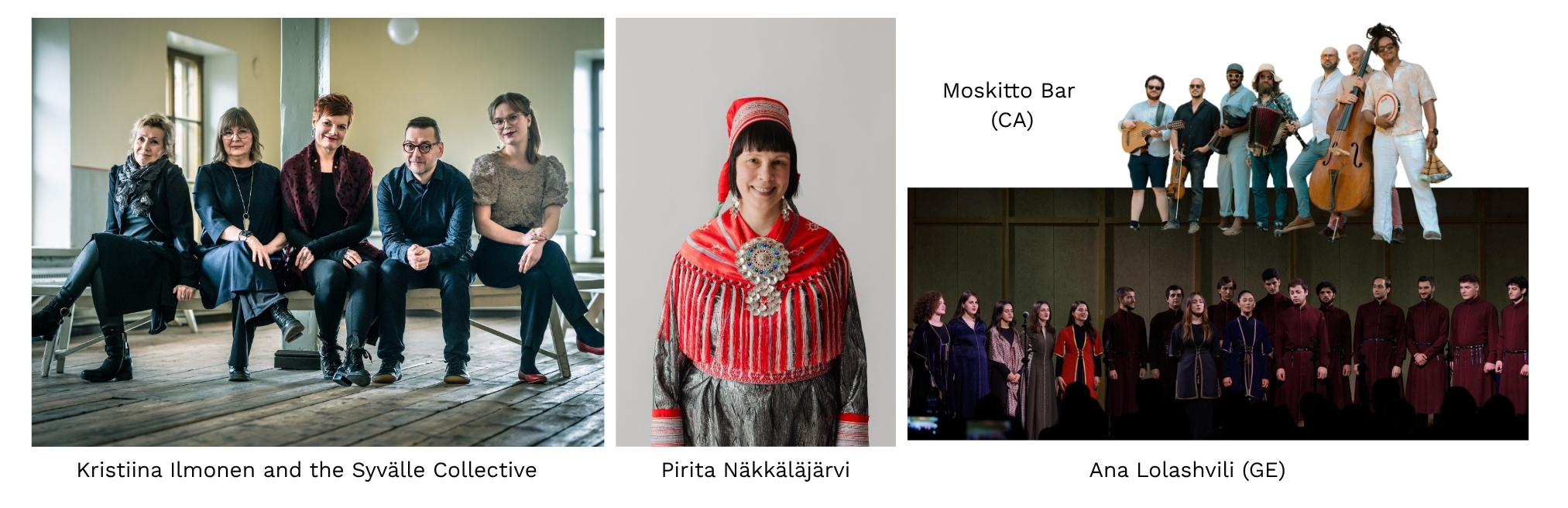
Lectures 10-11.30
Viiden tutkijan Syvälle-kollektiivi perehtyy improvisaation saloihin ja Suomen Saamelaiskäräjien puheenjohtaja tutustuttaa joiun historiaan ja merkitykseen.
10.00 Kristiina Ilmonen & the Syvälle Collective: Deep Encounters – New Perspectives on Improvisation in Dialogue with Artists
11.00 Pirita Näkkäläjärvi: How Sámieatnan duoddariid chose itself as the Sámi national yoik
Lectures 14.00-15.00
Kuinka musiikkia tehdään kulttuurien ja perinteiden risti paineessa ja mita kaikkea sisaltaa maailmankuulu georgialainen kansanlaulu.
14.00 Moskitto Bar (CA): Culture, Diversity and Music Making
14.30 Ana Lolashvili (GE): The Dialectal Diversity of Traditional Georgian Music
In addition
15.00 Tour of the Finnish Folk Instrument Museum exhibition Kaustinen fiddle playing – a living heritage
Thu 16.7. at 17.00-19.30 Museum Hall
Seminar:
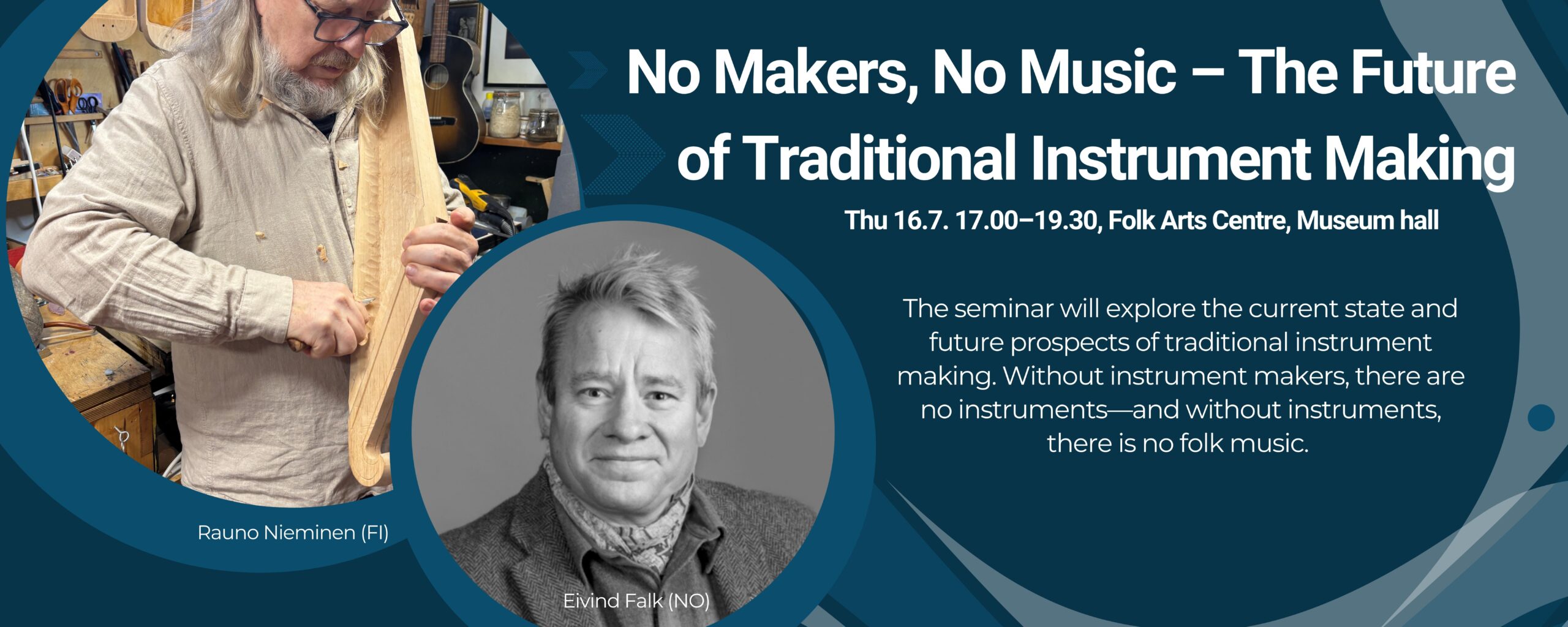
No Makers, No Music – The Future of Tratitional Instrument Making
The seminar will explore the current state and future prospects of traditional instrument making. Without instrument makers, there are no instruments—and without instruments, there is no folk music. How could the concept of living heritage and the 2003 UNESCO Convention offer new ways to highlight the significance of the instrument-making tradition in Finland, the Baltic countries, and the Nordic countries? What kinds of international networks are needed, and how should education in this field be organized?
17.00 Welcoming words
17.10 Rauno Nieminen – Traditional instrument building in Finland
17.40 Eivind Falk – The art of safeguarding a flute
18.20 Panel discussion – Strategies for Safeguarding Traditional Instrument-Making – Networks, transmission and education.
Chair: Matti Hakamäki
Panelists: Henna Tahvanainen (FI), Ilmas Pumpurs, (LV) Eivind Falk (NO), Michael Sibanda (ZA), Sanni Virta (FI)
19.00 Questions and answers
19.30 Closing the seminar
Rauno Nieminen offers reflections on folk instrument making in Finland, past and present. When traditional instrument maker Teppo Repo died in the 1960s, it was reported that the last Finnish folk instrument maker had passed away. A new generation of instrument makers emerged in the 1970s, but the question now is whether a further generation will follow them. In Finland, the challenge boils down to the lack of a professional, sustainable business model for folk instrument making — though encouraging examples do exist, particularly in kantele building.
Eivind Falk will present examples of safeguarding practices related to musical instruments, from the Bigwala trumpet in Uganda to the Norwegian willow flute. His examples are collected from his work as an Editor-in-Chief for the by UNESCO accredited NGOs journal #HeritageAlive, and their publication on Musical Instruments.
In the panel, experts from Latvia, South Africa, Norway and Finland will discuss the seminar's theme. How is the craft of traditional instrument making being safeguarded for future generations, and what projects and examples offer inspiration? How could the concept of living heritage and the 2003 UNESCO Convention offer new ways to highlight the significance of instrument-making traditions in Finland, the Baltic countries, and the Nordic countries? What kinds of international networks are needed, and how should education in this field be organized?
Fri 17.7. at 10.00 Museum Hall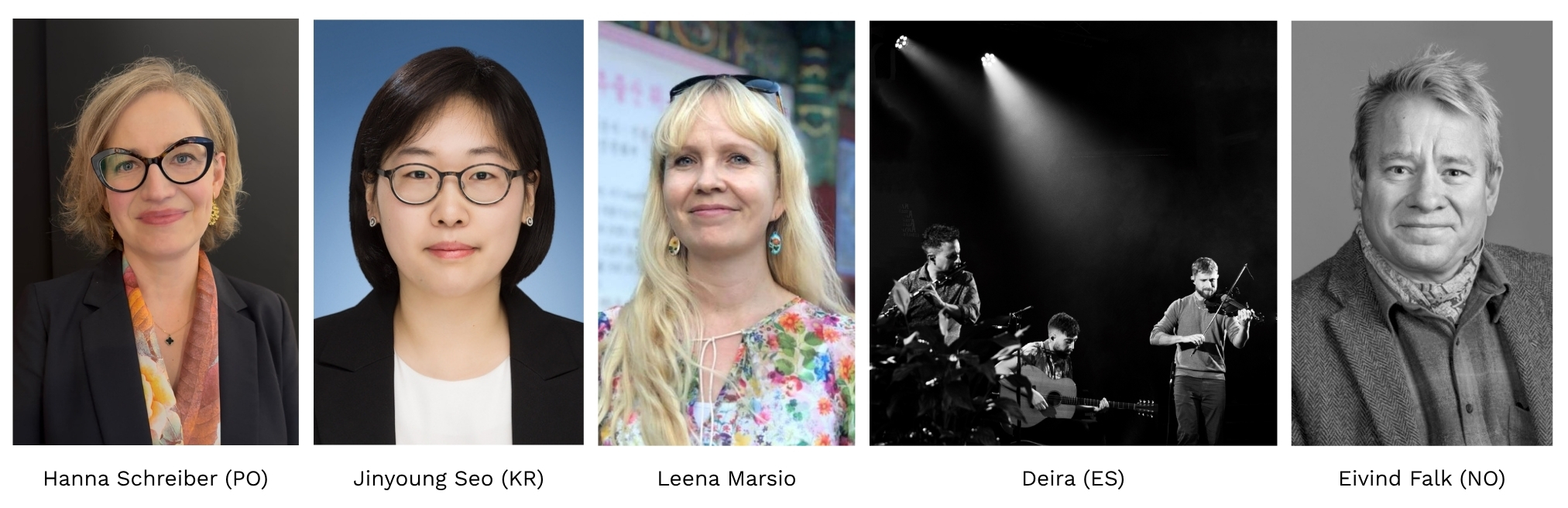
Lectures 10-11.30
The topics for the morning session include the role of municipalities and cities in the preservation of living heritage, the preservation of traditional musical instrument-making in South Korea, and the cataloging of Finland’s living heritage and related sustainability efforts.
10.00 Hanna Schreiber (PL): Municipalities, Communities and Living Heritage: What Can We Learn from Warsaw and Kaustinen?
10.30 Jinyoung Seo (KR): Akgijang, From Wood to Resonance
11.00 Leena Marsio: Inventorying living heritage – a look into sustainability perspectives
Lectures 14.00-15.00
The lectures will feature Astorian folk music and introduce the Norwegian Crafts Institute, a Norwegian organization accredited under the 2003 UNESCO Convention.
14.00 Members of Deira Band (ES):: Asturian folkmusic as Celtic Heritage
14.30 Eivind Falk (NO): Norwegian Crafts Institute
In addition
15.00 Tour of the Finnish Folk Instrument Museum exhibition Kaustinen fiddle playing – a living heritage
SAT 18th JULY 11-13.30, Folk Art Centre, Kaustinen Hall
Seminar:
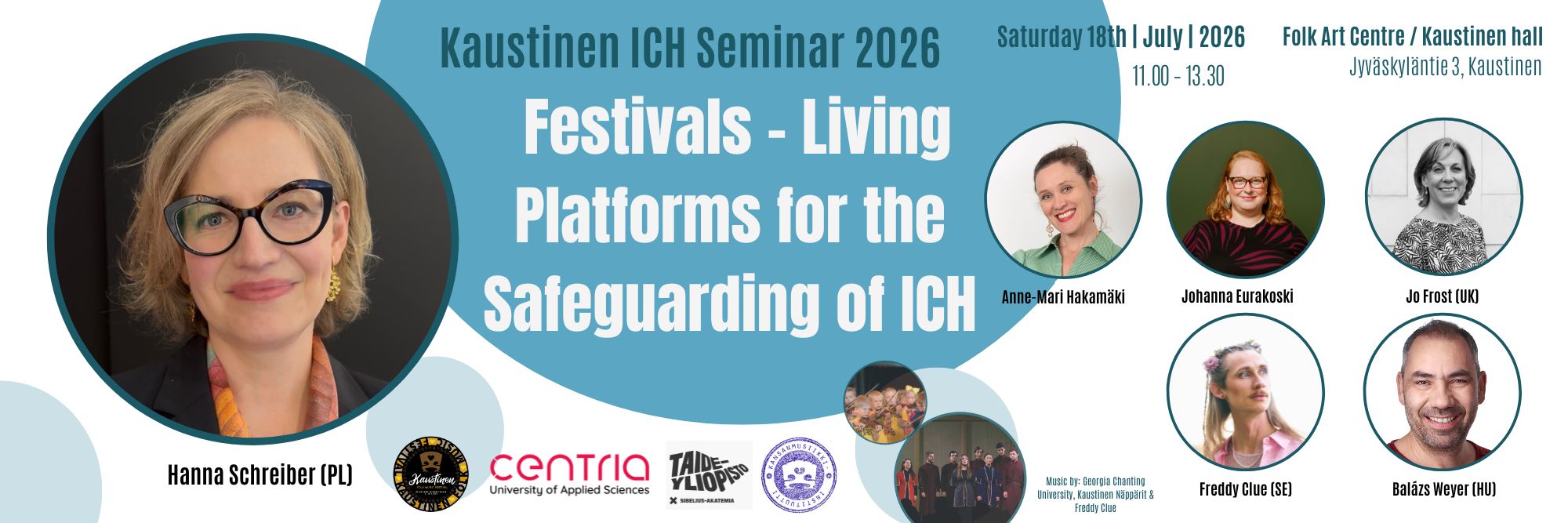
Kaustinen Intangible Cultural Heritage Seminar 2026: Festivals – Living Platforms for the Safeguarding of ICH
The seminar will examine the role of events as platforms and tools for the safeguarding of intangible cultural heritage. The seminar will highlight what the 2003 UNESCO Convention and the concept of living heritage can offer music events—including increasing interest among a broader and more diverse audience and strengthening the social significance of festivals. The keynote address will be delivered by Professor Hanna Schreiber (Poland) and in a panel discussion led by Anne-Mari Hakamäki, program director of the Kaustinen Folk Music Festival, the topic will be discussed by Jo Frost, a longtime reporter for Songlines magazine (United Kingdom), musician Freddy Clue (Sweden), Balázs Weyer, director of the Hangveto organization (Hungary), and Johanna Eurakoski, program director of the World Village Festival. Musical entertainment will be provided by, among others, Kaustisen Näppärit.
The seminar will be streamed at the Finnish Folk Music Institute Youtube channel.
11.00 Matti Hakamäki: Welcome to the seminar
11.05 Choirs of the University of Chanting (GE)
11.15 Hanna Schreiber (PL) – Living Heritage and the Paradox of Participation: Are our Festivals Democratic Enough?
11.50 Children group Näppärit from Kaustinen
12.00 Panel Discussion – Festivals and Safeguarding of ICH. Programme Director Anne-Mari Hakamäki will host a panel discussion where musicians, festival organizers and experts from different fields reflect on the seminar theme. The panelists are musician Fredy "Clue" Lundh (SE), Balázs Weyer (HU), Jo Frost (UK) and Johanna Eurakoski.
13.10 Questions and answers
13.25 Closing music – Fredy Clue (SE)
Link to the seminar on YouTube: https://youtube.com/live/rLOLx793hWo?feature=share
The seminar will be streamed at the Finnish Folk Music Institute Youtube
channel: @kansanmusiikki-instituutti898